
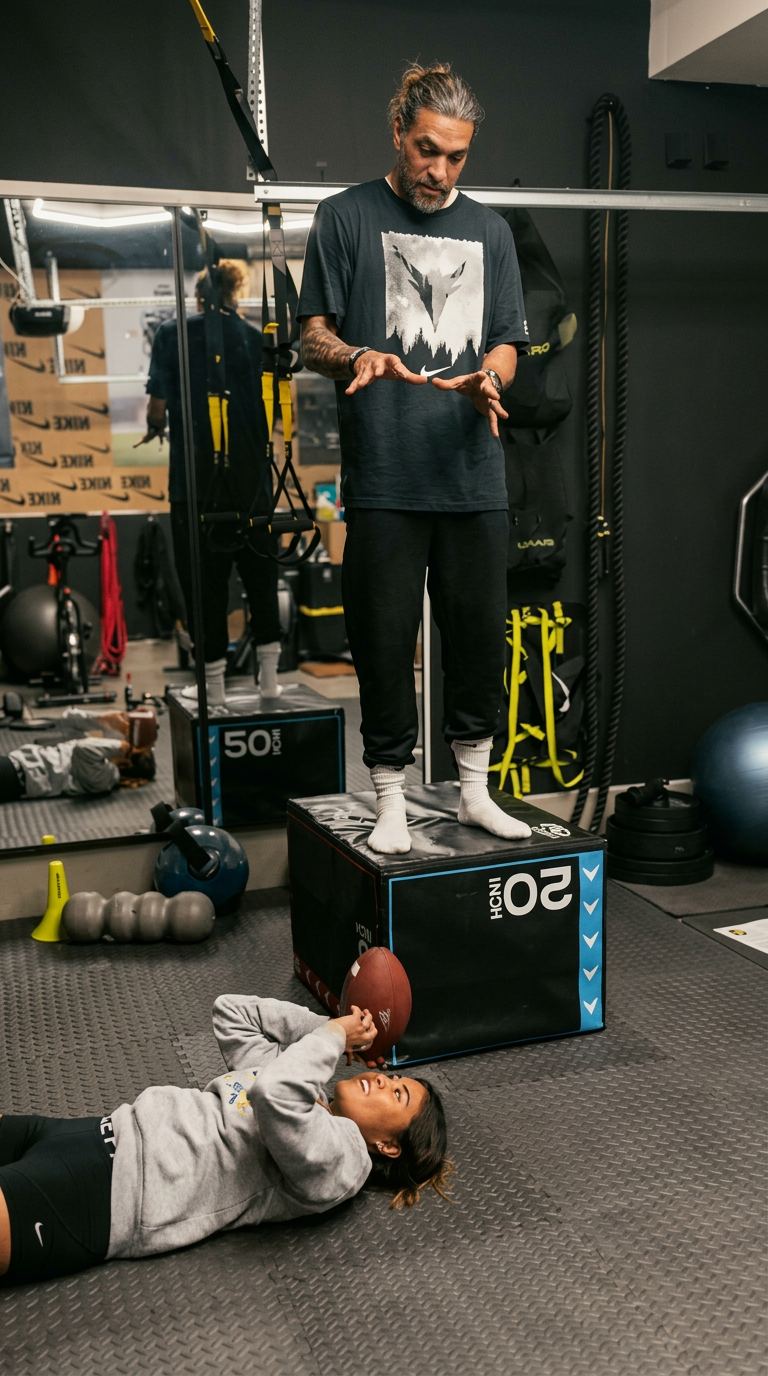
Why the warm-up is training
Warming up raises muscle and core temperature, which speeds nerve conduction and makes muscle more compliant, so force is produced faster and tissue tolerates stretch better. That is why a proper entry to a session both improves output and reduces soft-tissue risk — the FIFA 11+ and similar structured warm-up programs have repeatedly cut injury rates in team-sport athletes by roughly a third when performed consistently.
Static stretching alone does not do this. Holding a long passive stretch for more than about 60 seconds immediately before explosive work can temporarily blunt sprint and jump output. Movement-based preparation does not.
The five-phase sequence (12-18 minutes)
- 1. Raise (3-4 min): easy jog, skips, lateral shuffles, pogo hops. Target light sweat and a breathing rate you can still talk through.
- 2. Mobilize (3-4 min): dynamic range at the ankles, hips and thoracic spine — world's greatest stretch, hip flexor rock-back, ankle knee-to-wall, open-book rotations.
- 3. Activate (3 min): glute bridge, band lateral walk, dead bug, calf/tibialis work. Wake up the muscles that stabilize knee and pelvis.
- 4. Potentiate (3-4 min): A-skip, straight-leg run, build-up sprints at 70 / 80 / 90 / 95%. Never jump from jogging straight to maximum sprint.
- 5. Rehearse (2-3 min): two or three reps of the first exercise of the session at low load, or the first cut/change-of-direction pattern at controlled speed.
Coaching standards
- Ankle mobility check first: knee-to-wall should reach roughly 8-10 cm without the heel lifting. Restricted ankles push the knee and hip into worse positions all session.
- Every athlete builds up to speed. The last build-up should be at or near the top speed of the day's work.
- Save long static holds for after training or a separate mobility block.
- Same order, every session. Consistency is what makes it protective.